Play Now
Join a Game
Characters
Shop
Tools
Compendium
Community

Sign In

Play Now
Join a Game
Characters
Shop
Tools
Compendium
Community
Sign In
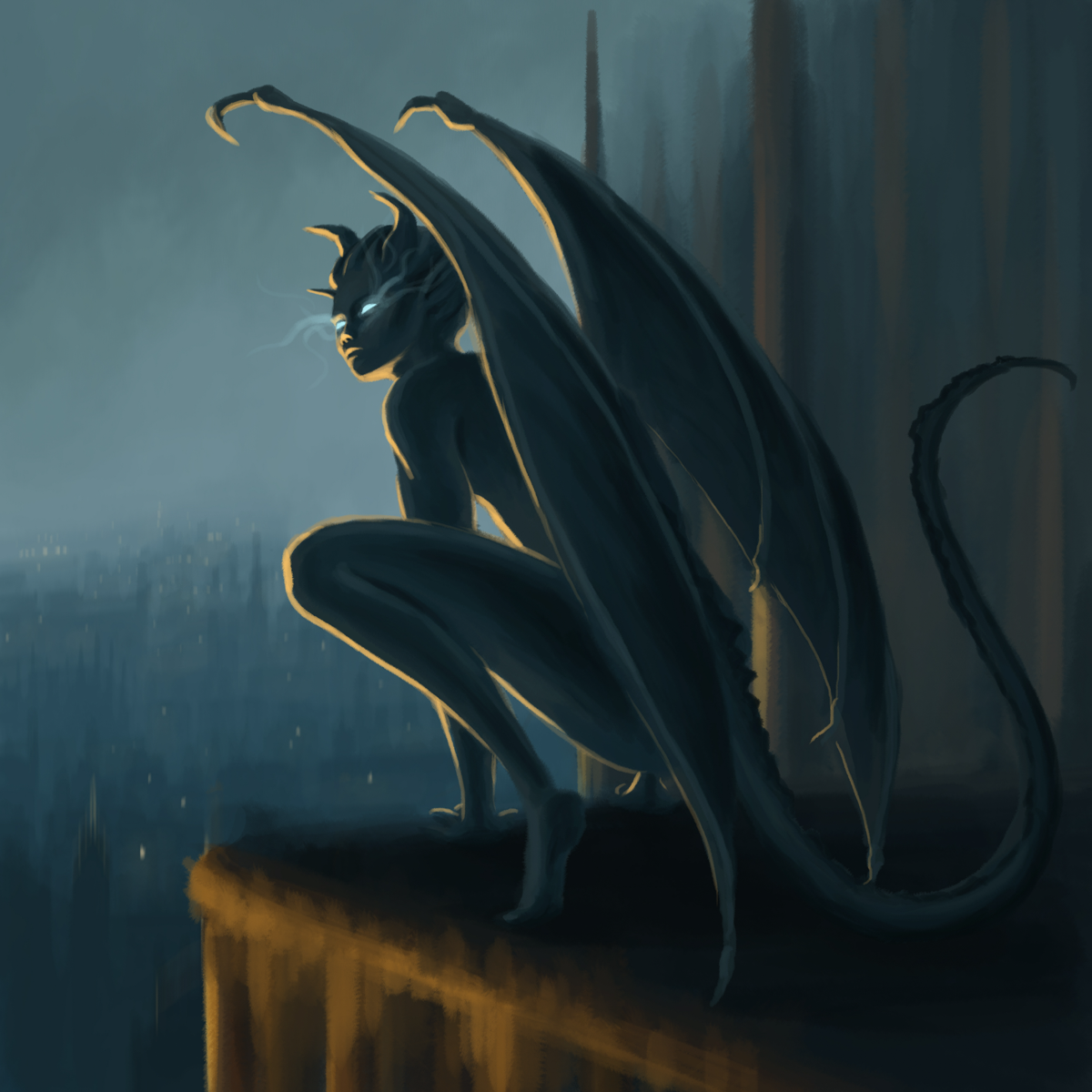
Droaam has the highest Concentration of gargoyles in Khorvaire. Grimstone Keep is the center of gargoyle culture in Droaam, but there has long been a significant gargoyle presence in Cazhaak Draal, living in harmony with the medusas of the Stonelands. Gargoyles can be found in most of the major cities of Droaam, serving as couriers and scouts.
Stone in Many Forms. The standard gargoyle described in the Monster Manual is the most common form, originating near the end of the Dhakaani Empire. However, gargoyles can be designed in a wide variety of shapes; a gargoyle could have the appearance of a dhakaani soldier or of Dol Dorn. Such gargoyles use the standard Monster Manual stat block with the following modifications:
Sinister Influence. While their origins are tied to the daelkyr Orlassk, the daelkyr has no influence over the gargoyles of the present day. However, gargoyles in the region can be corrupted by supernatural forces. Demonglass Gargoyles are infused with the essence of a fiend, while Quickstone Gargoyles are directly tied to the daelkyr Orlassk.
 Quickstone gargoyles are formed of blood-red quickstone, and like this supernatural substance, they can shift between being hard or soft. In its softened form, a quickstone gargoyle can stretch its limbs great distances. It can also reshape the stone of its body. It can use this ability to make cosmetic alterations to its body, or to mimic the appearance of a humanoid creature; however, it is always clearly made of stone, so it appears to be a statue of the creature it is impersonating. When it shifts into its hardened form, a quickstone gargoyle strikes with more force and is resistant to physical attacks.
The daelkyr Orlassk had a direct hand in the creation of quickstone gargoyles. Many directly serve the Still Lord and his cultists. Others were created long ago to fight the Dhakaani and have slumbered for centuries; they are more independent and aren’t inherently hostile. Such gargoyles often dwell in Dhakaani ruins, where they mimic the forms of petrified dar; when outsiders come to their ruins, the gargoyles may mimic the newcomers as a form of entertainment, or they may feel driven to defend their territory. Those that work with cults often understand Goblin or Common, but quickstone gargoyles are more alien in their outlook than the standard gargoyles. They rarely speak, even if they have the ability to do so; they prefer to express themselves by altering their shape or features.
False Appearance. While the gargoyle remains motionless, it is indistinguishable from an inanimate statue.
Quickstone Body. At the start of its turn, if it does not have the Incapacitated condition, the gargoyle can choose whether it adopts a Hardened or Softened Form, each of which grants bonuses.
Multiattack. The gargoyle makes one Bite attack and one Claw attack.
Bite. Melee Attack Roll: +5, reach 5 ft. Hit: 6 (1d6 + 3) Piercing damage.
Claw. Melee Attack Roll: +5, reach 5 ft. (15 ft. in Softened Form) Hit: 7 (1d8 + 3) Slashing damage (12 (2d8 + 3) Slashing damage in Hardened Form).
Fluid Form (Softened Form Only). The gargoyle takes the Dodge action.
Remold. The gargoyle transforms into a Medium Humanoid, Humanoid statue it has seen, or back into its true form. Its statistics are the same in each form, though it still appears to be made of stone, except that it loses its Fly Speed if it takes the shape of a Humanoid without wings. Any equipment it is wearing or carrying isn't transformed. The gargoyle can choose to reshape its claws to resemble melee weapons of its choice. The damage dice remain the same, but when it takes a new form it can choose to deal Piercing or Bludgeoning damage instead of Slashing damage. It reverts to its true form if it dies.
Rapid Hardening. Trigger: The gargoyle is hit by a weapon attack roll. Response: The gargoyle gains a +5 bonus to AC against the triggering attack.