


13th Age
Compendium
Type to search for a spell, item, class — anything!
Creating Characters
 Since the d20-rolling game mechanics for combat and adventuring are similar to the mechanics in other games, let’s cover the stuff that’s unique to 13th Age first: the storytelling aspects of character creation that help players co-create the campaign along with the GM.
The pre-generated characters on the Pelgrane website have their character stats, abilities, spells, and feats already filled out, so no one has to sort through the crunchy stuff in the game book. The characters don’t have names or personalities yet, nor do they have the fun stuff that personalizes your heroes in 13th Age:
- One Unique Things (that make each hero a special part of the world, someone who may one day have a true hero’s legend)
- backgrounds (that tell everyone what your character has been up to before this adventure)
- icon relationships (that connect heroes with the powerful NPCs whose conflicts and alliances set the stage for adventures in the world)
When your players join you at the table for the first game, hand out character sheets and the one-page summary of the icons. While they look over their character sheets, go over what each player gets to add their character.
Since the One Unique Thing (also known as your unique) is the most dramatic element of a character, we usually find that it’s the thing to get players started thinking about early. Once people have figured out their unique, the rest of the character tends to fall into line.
One Unique Thing
Every 13th Age character has something about them that makes them different from everyone else. This One Unique Thing can be mundane (“I’m the only halfling knight in the Empire”) or supernatural (“I alone among the living can speak the secret language of the undead”). It can define the character’s past (“I’m the last survivor of a barbarian tribe, so all our tribal gods ride with me”) or future (“I’m destined to be the best swordfighter in the world!”). One Unique Things can’t be used directly in combat—if a player really wants to give their character an unusual power that gives them an edge in battle, they should be prepared to either give up something valuable in exchange, or accept that the GM will balance the scales by making their hero’s life more difficult.
One Unique Things may or may not come up in a one-shot adventure, but they’re an important way that 13th Age defines player characters, makes them part of the setting, and provides the feeling of heroic fantasy. Sometimes a unique may seem like it’s not all that heroic or interesting, at first. You can leave the full implications of what’s going on with the unique to be worked out during your campaign! (For example, the unique “Dogs love me” could provide the seed for an adventure that reveals the character is a descendant of the werewolf Empress in the Age of the Howling Moon.)
Because new players sometimes have trouble coming up with a One Unique Thing, here’s a short list of possible uniques that could be fun and create amusing situations.
- I may look like a dwarf/halfling/elf to you, but actually I’m a former god from another dimension, fallen into a mortal body.
- I’m the only human who can speak with magic items, even if they’re not my magic items. They don’t always talk with me, but even the ones that would rather ignore me are surprised when I talk with them.
- I am the only human child born from a zombie mother.
- Wherever I sleep, flowers sprout and bloom.
- I’m the only tiefling with a permanent halo.
- My father was an ogre mage and my mother was a rakshasa. I mostly look human, but that may be magical, and it may change.
- I’m the only halfling acrobat to escape from the Diabolist’s Circus of Hell.
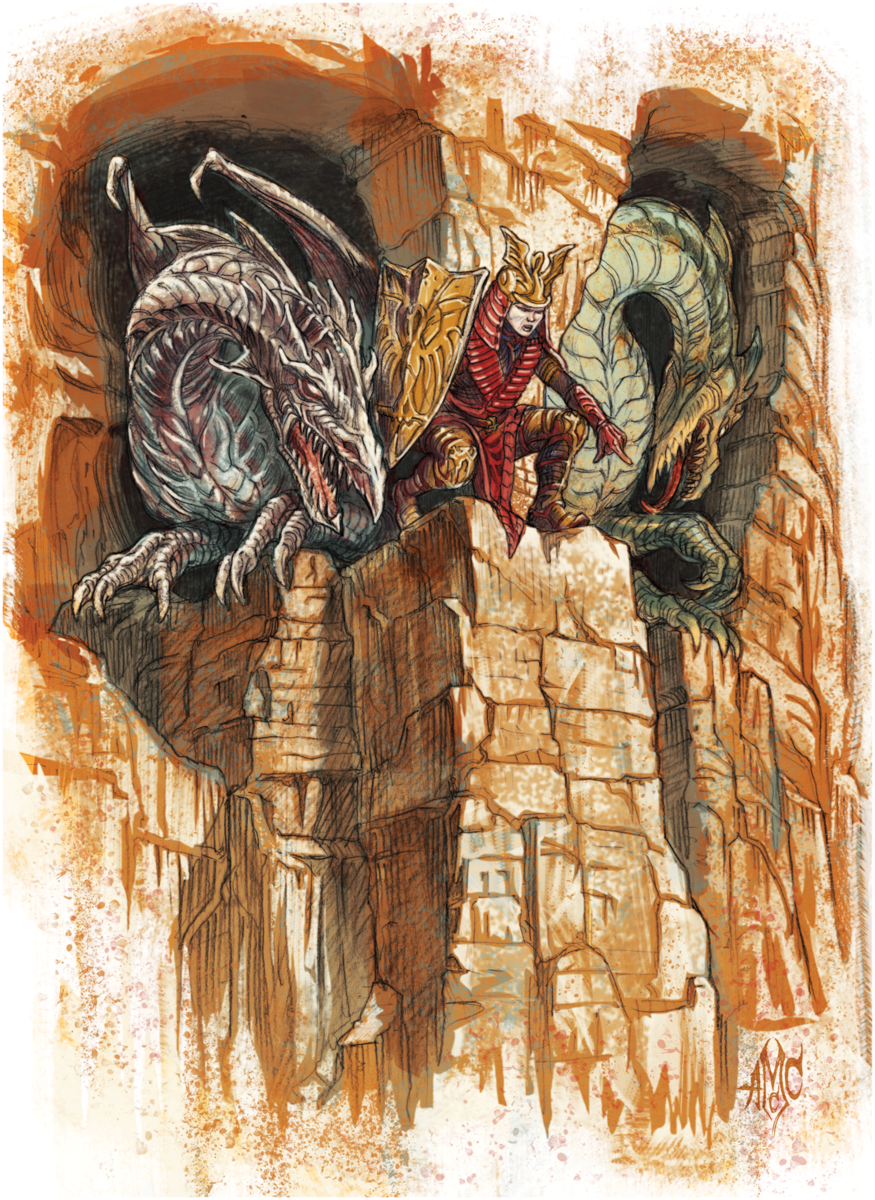
- Dragons like me. They don’t always take me seriously, treating me like a mascot or a funny pet, but that’s better than wanting to eat me.
Backgrounds
Backgrounds are what we use in place of skill points: a character’s chance to succeed at non-combat challenges is helped by their previous experiences. In your past, did you do something that required a lot of climbing? That’ll help you get up that cliff. Were you exposed to the political intrigues of a royal court? You might be the best person to negotiate with that orc warlord!
Each player has 8 points to assign to backgrounds that they create, with a maximum of +5 going to any one background. As described below, these points provide bonuses to skill checks. For most players, we find that three backgrounds (+5/+2/+1, or +4/+3/+1) is enough to create a well-rounded character with useful skills.
A background can be anything that describes the character’s past experiences, talents, or skills. They can be brief and to the point (Alchemist +3, Miner +2, Mountaineer +3) or more descriptive and complex (Disgraced Apprentice to the Emperor’s Chief Alchemist +3, Only Survivor of the Thunder Falls Mine Disaster +3, Captain of the Dwarven Mountain Rangers +3, Prep Chef in a Monster Restaurant in Drakkenhall +4).
Descriptive backgrounds give players more to riff on when you ask them for a skill check. Pretty soon the mini-stories about a character’s previous life as a disgraced apprentice alchemist interweave with the current campaign.
If players have started with one-word backgrounds, you might encourage them to add details during play. Players are especially receptive to that type of advice when it helps them add their background to a skill check that it didn’t appear relevant to at first!
As with the One Unique Thing, you can use your backgrounds to tell the GM what you want the campaign to be about. Here’s a link to a fun article on the Pelgrane Press website that discusses using a character’s backgrounds to generate an entire adventure.
Using Backgrounds in Skill Checks
To make a skill check, roll 1d20 and add your level, the most appropriate Ability Bonus (from Strength, Dexterity, Intelligence and so on), and your most relevant background. As mentioned above, 13th Age doesn’t use pre-defined skills. Instead, each player character has a number of backgrounds, each of which has a numeric rating—like “Former Royal Bodyguard +4.”
You can apply your background’s bonus to any situation in which it’s appropriate. So, you might roll 1d20 + Charisma + Level + Former Royal Bodyguard +4 when trying to impress a noble with your knowledge of courtly etiquette, or 1d20 + Wisdom + Level + Former Royal Bodyguard +4 when trying to spot an assassin in a crowd. Maybe you could even persuade your GM that your Former Royal Bodyguard background applies when trying to detect poisoned food, because part of your Royal Bodyguarding duties was to taste the prince’s food each day.
When rolling skill checks, the players try to beat a Difficulty Class (DC) that reflects how hard the task is, and which tier of play they’re playing in. For low-level adventurers like the ones you’ll be starting with, assume that they need to roll a DC 15 check for a normal task, DC 20 for a hard one, and DC 25 for an absurdly hard one.