
Play Now
Join a Game
Characters
Shop
Tools
Compendium
Community

Sign In

Play Now
Join a Game
Characters
Shop
Tools
Compendium
Community
Sign In
There are few trappings of faith on the frontier. Churches aren’t the gilded citadels you can find in Sharn or Flamekeep. The simple fact is that the people of Breland have always been cynical and pragmatic, never ones to believe that their destiny is in the hands of divine forces. And yet, on the frontier, you’re far from the comfort and security that comes easily in the big cities, and there’s a comfort to believing in something greater than yourself—in believing that there is a higher power guiding or working through you, that you have been granted a divine gift or charged with a purpose. Beyond that, a shared faith helps hold a community together, which is important in a small village where everyone needs to depend on one another. The holidays of the Sovereign Host are described in chapter 3, and while celebrations may not be as grand as their counterparts in Fairhaven or Wroat, these feasts and festivals are often important to a community in a way they simply aren’t in the east.
The Sovereign Host is the dominant faith of the Brelish population, while the worship of the Dark Six—particularly the interpretation known as the Cazhaak Six—is a common faith within Droaam. However, especially within Droaam, there are a host of lesser traditions. The minotaurs of Turakbar’s Fist are devoted to the fiend they call the Horned King. The gnolls of the Znir Pact refuse to bow to any god or demon; in place of shrines, they raise piles of stones to represent the idols shattered by their ancestors, and they stare at these cairns and meditate upon their freedom. In general, the people are indulgent of the beliefs of others, even if they don’t like them. The Znir gnoll despises fiends, but they’ll still work with a warlock-priest of the Horned King if the pay is good. In Quickstone, House Orien knows the Khaar’paal kobolds that work for them worship the Dark Six and hold revels to the Fury, but they’re also really good at placing conductor stones, and that’s what matters most. People of conflicting faiths may not trust or like one another, but that doesn’t stop them from ever working together.
As is common across Khorvaire, it’s important to remember that most priests serving in churches and shrines don’t have the powers of a Cleric or Paladin. Many are adepts (divine Magewrights) who can cast Thaumaturgy, Ceremony (from Xanathar’s Guide to Everything), and perhaps one other cantrip or ritual—such as Light, Spare the Dying, or Augury. The role of the priest is to offer spiritual guidance to the community, to preach and to organize the local festivals. There are some remarkable priests who do possess greater powers—Vesper in Quickstone, Zerasha in Graywall—but that’s not what people expect from their priests. You go to the Jorasco healer if you need someone to heal an injury; you go to a priest of the Sovereign Host when you need someone to lift your spirits. So priests are often influential people within their communities, but they aren’t always powerful spellcasters. As a Paladin or a Cleric, you’re a champion of your faith granted the power to face challenges a village priest cannot, and they ask you to deal with problems that threaten their community.
 The Sovereign Host is the common faith of Breland, and this is certainly true on the frontier. Every major town has a church dedicated to the Sovereign Host, and even some of the villages have churches or small shrines where the faithful can pay their respects. Generally, people worship the pantheon as a whole, offering their prayers and thanks to whichever of the Sovereigns is most relevant to the challenges they’re facing at the moment. However, some towns or individuals feel a particular strong connection to a specific sovereign. The town of Shavalant considers Balinor to be its personal patron, while Ardev has a popular shrine devoted to Boldrei. A blacksmith may honor all the Sovereigns in their moment, but still believe that it is Onatar’s voice that speaks the loudest.
While the Sovereigns can affect the world as a whole—Arawai brings gentle rains, Olladra grants the gift of good fortune—the Sovereigns primarily affect the world by guiding the faithful. Dol Dorn doesn’t cause wars, but he will lend his strength to any soldier who trusts in him. It’s the smith who forges a blade, vbut Onatar can guide the smith’s hand. Some people offer sacrifices to the Sovereigns in moments of great need, but such sacrifices need not have a physical component. A typical sacrifice is a vow—a promise to take some action that honors the Sovereign. This could be a pilgrimage or a prayer, but it can also be more abstract. A scholar struggling with a problem might make a vow to Aureon that if the Sovereign can offer new insight, the sage will finally finish the book they’ve been putting off—a fitting vow to the Sovereign of knowledge and learning. A warrior who’s outnumbered in battle may promise Dol Arrah that if they live through the encounter, they will help the next person they see facing impossible odds in a fight. The primary role of a Vassal priest is to teach people to hear the voices of the Sovereigns within themselves, to realize that the Sovereigns are with them at all times, always ready to lend a hand.
The priesthood of the Sovereign Host isn’t as strictly structured as that of the Church of the Silver Flame; many priests are self-taught, especially on the frontier. What matters is your faith and that the people of your community believe in your connection to the Sovereigns. In the village of Cooper Shrine on Silver Lake, the priest Mala Cooper wasn’t ordained in a grand temple. But she has tended the shrine since she was a child, and the people of Silver Lake believe that she is blessed. Because of this, priests are dependent on their community to maintain their church, and any Vassal who has unexpected good fortune will usually make a donation.
As noted above, the festivals of the Sovereign Host are important events in the Brelish towns and villages. Often, people in small villages and farms will travel to the nearest town for a celebration, but people can also just celebrate Bounty’s Blessing with the largest meal they can produce at their home. The point of a festival is to affirm shared faith and the bonds between a community, and this is something to keep in mind when playing a Vassal character. The Sovereigns speak to you directly, offering you personal guidance. But Boldrei tells you that people are stronger together. Dol Arrah urges you to defend those who cannot defend themselves. In playing a Vassal, keep in mind that it’s not just a question of what the Sovereigns can do for you; it’s about the connection you have with others through your shared faith. If you find a goblin treasure trove, will you give thanks to Olladra and share this windfall with your local priest? Or do you only turn to the Sovereigns when you need something from them?
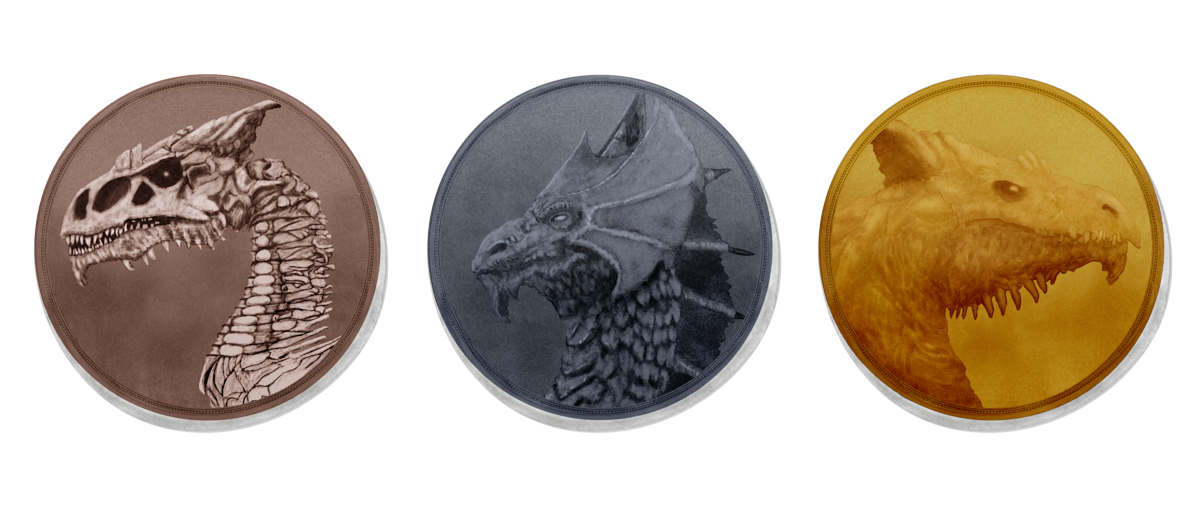 The Three Faces are a set of mystery cults hidden within the Five Nations. In addition to the Three Faces of Coin, there are also cults dedicated to the Three Faces of Love, the Three Faces of War, and the Three Faces of the Wild. Each of these cults worship a small combination of members of the Sovereign Host and the Dark Six, who together represent a portfolio. While they are secretive organizations, they’re called “mystery cults” because they possess secret knowledge that they only share with their initiates. While they are religious organizations, they are also fraternities that unite people who have talents within a certain field—people who, through their success, have shown that they are blessed by one or more of the three faces. So, not every soldier is invited to join the Three Faces of War. If you’re tapped by a member of the cult, it’s because the initiates recognize through your skills and accomplishments that you are blessed by one of the three—and they believe that you can understand the central mystery, which is that war has more than one face, and that honor, courage, and cunning all have a place on the battlefield. Initiates are bound together by the secret knowledge they possess and their shared understanding of the world, but the Three Faces cults don’t have any sort of sinister agenda; it’s a bond of fellowship. A Thrane and a Karrn who are both members of the Three Faces of War will fight one another on the battlefield, and two merchants in the Three Faces of Coin will still engage in fierce haggling, because that is what they do; but between these battles, when they share the words of their three, they know that they understand the same mysteries and have a shared understanding of how the world works, and that they have both been deemed to be blessed by the three. So you can certainly have a player character be a member of a Three Faces cult; there’s nothing inherently evil about them. Essentially, there’s no reason that membership in the Three Faces has to be hidden, aside from the fact that outsiders can’t understand the mysteries.
While the Three Faces cults believe that all three of their Sovereigns work together, initiates are chosen because they are perceived to be blessed by one of the three. So the Three Faces of Coin govern the “battlefield” of commerce and industry, the struggle to get the things that we desire. Onatar guides those who create the goods people desire, Kol Korran inspires those who trade in the light, and Kol Turrant guides those who work in the shadows. You should always be able to get the things you desire, but you should always pay a fair price for what you receive. All people should have a path to profit, provided they are willing to work for it. These are the tenets of the Three Faces of Coin. An honest blacksmith should always be able to profit from their hard labor, and someone who wishes to purchase the smith’s goods should have a way to do so—even if that requires them to work with a “Pennyroyal,” someone favored by the Keeper. Coins (the casual term for initiates of the sect) don’t inherently oppose trade laws; they simply believe that there should always be a way around them for those prepared to work for it. The honest merchant may never deal with a Pennyroyal, but they know that they could. The information that follows reveals some of the mysteries of the Three Faces of Coin; these aren’t absolute secrets, but if you’re not part of the cult, you likely don’t know these things.
The dark side of the Three Faces of Coin is reflected by their embracing Kol Turrant. The Pyrinean Creed says that the Keeper is the Sovereign of Greed. The Coins understand that in the right time and place, greed can be good—that it is better to understand it and use it than to run from it. Everyone wants things. Everyone who creates wants people to want those things they create. The Coins say that there’s nothing wrong with that desire and there’s nothing wrong with bending the rules to get what you want, as long as you are willing to pay a fair price. Fair payment is a central pillar of this faith: People deserve to be paid for good work. As such, the Three Faces of Coin are one of the only religious sects that is openly willing to sell the spells of its divine spellcasters. The spell is a commodity; if you want it, you should pay for it. This doesn’t mean that as a Coin cleric you HAVE to charge your companions when you cast a spell; but it means that you recognize that your magic has value, that you could charge for it, and that if you are choosing to give this as a gift to a friend, they’d better appreciate it!
Those blessed by Kol Turrant—the Pennyroyals—walk a crooked line. The classic Pennyroyal is a smuggler or a fence—someone who dodges the laws in order to get people the things they desire. However, Pennyroyals also include grifters, pickpockets, and thieves. This follows the principle that you should always be able to get the things that you desire—it just skirts the point of paying a fair price (though the thief should be paid a fair price for their services). Ultimately, this comes to the point that it’s up to you to decide which of the three paths you will walk. You can choose to only follow the path of Kol Korran and to engage in honest commerce; but as a follower of the Three Faces of Coin, you recognize your comrade’s right to step into the shadows when they can’t get what they desire in the light.
The holy symbol of the Three Faces of Coin is three coins. When someone is initiated into the sect, they receive three special coins: a copper coin with the dracolich profile of Kol Turrant, a silver coin with a brass dragon for Onatar, and a gold coin with a white dragon profile for Kol Korran. While these coins are treasures, any spread of copper-silver-gold can be used as a signal. This is also the origin of the term Pennyroyal, as the copper coin of the Keeper is sometimes called a penny; “Penny Royal’’ thus means “Keeper’s Chosen.”
The Three Faces of Coin can be found across Khorvaire and on the frontier, but you likely won’t notice them if you aren’t an initiate. The exception to this is in the town of Quickstone. A contingent of Coins banded together to help found the town, and they make up a significant portion of the population; as a result, they are a little more open with their faith than usual. However, they still won’t share their mysteries with you unless you’ve been blessed by one of the Three; they just aren’t shy about acknowledging their beliefs.
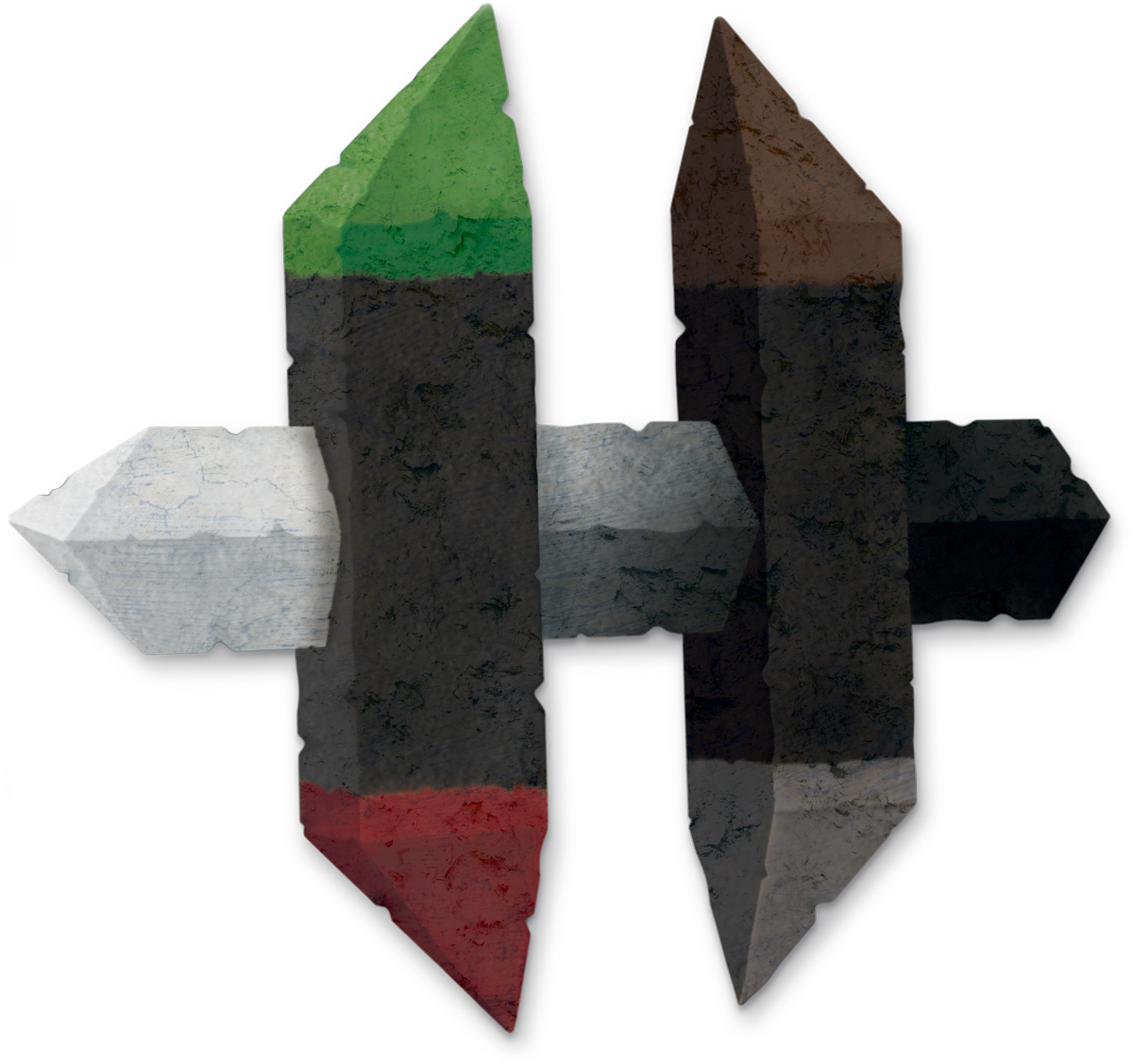 Most Brelish settlers follow the Pyrinean Creed of the Sovereign Host, which teaches that the Dark Six are destructive forces that should be shunned, that they encourage greed, madness, and murder. That the Devourer sends the storms that can level your farm and your fields, and that the Shadow creates the monsters that will come for you. With that said, the Brelish are both cynical and pragmatic. There are some who are willing to bargain with the Six if it gets them the things that they desire—whether that’s burning a field as a sacrifice to the Devourer so he’ll spare the other fields, or shooting a man in the back because they know they can’t beat him in a fair fight. They may not be proud of this behavior, but there are those willing to walk the path of the Six to get what they want. This is the basis of the Three Faces cults, who are willing to see both sides—to embrace Dol Arrah and the Mockery, or Kol Korran and the Keeper.
Overall, however, the Brelish settlers still shun the Dark Six and curse them when things go wrong. The fact that the Droaamites honor the Six is proof to the Brelish that they’re dangerous. Most settlers don’t know the difference between Droaamite followers of the Six and the cults of the Horned King, and they don’t care; they’re all malevolent forces decent people should leave alone.
Droaam is a tapestry of many microcultures. Step back a century and what you’ll find is that many of these cultures worshiped various configurations of the Dark Six, but didn’t use common names for them or acknowledge the full grouping. The harpies of the Byeshk Mountains worshiped the Song of Rage and Fury, while the Gaa’aram orcs invoked the Bloody Knife; anyone listening to their stories could recognize the shape of the Fury and the Mockery, but the harpies had no knowledge of or interest in the Bloody Knife. This changed because of the efforts of the medusas of Cazhaak Draal, whose missionaries traveled across the Barrens. Few people want to pick a fight with a medusa, so these missionaries were able to share their stories. This had a syncretic aspect, very similar to the way in which the Pyrinean Creed wove the faiths of the Shadow Marches and Talenta Plains into the Sovereign Host; the Cazhaak Missionaries were able to show the harpies that the Song of Rage and Fury was the force they called the Fury, and convince the Gaa’aram that the Bloody Knife was the Mockery.
The most important effects of this missionary work were creating a common language for discussing faith and presenting the idea that these deities that had existed in isolation were part of a unified pantheon. In the present day, the harpies still revere the Fury above all others, but this is the same way that a Vassal blacksmith values their connection with Onatar over the other Sovereigns; they still know that the Fury is part of the greater pantheon, and may invoke other members of the Six when the situation calls for it.
The diverse beliefs of Droaam still persist; if you go to the Street of Shadows in Graywall, you’ll find a shrine to the First Song and one to the Howl—two different interpretations of the Fury worshiped by different harpy flights. But these traditions are unified by the underlying structure of the Cazhaak faith. Most Droaamites recognize the Shadow as the patron of all monsters, the source of the harpy’s voice and the medusa’s gaze, and priests of the Shadow are respected by all; the harpy who sings a prayer at the Shrine of the Song will continue on to the Eye of the Shadow to ask the priest Zerasha for guidance.
The general practices of the Dark Six are presented in Exploring Eberron. The primary point is that what the followers of the Sovereign Host see as evil, the followers of the Cazhaak Six see as virtues. The Fury guides the faithful through primal instincts, and grants justice in the form of vengeance. The Mockery shows you the path to victory; what sensible warrior would choose an honorable death over a cunning victory? The Shadow will help you achieve your full potential, even if that means walking paths that others fear. The Cazhaak faith acknowledges that the Sovereigns exist, but it considers them to be weak powers who have somehow tricked their followers. The Vassals say that the Shadow is evil because it creates medusas and harpies; the medusa and the harpy say don’t blame us if your gods aren’t willing to give you such powers.
Why Mock The Mockery?
The followers of the Cazhaak Six respect the use of cunning and deception in battle. So why then do they call the Sovereign of these forces “the Mockery?” The simple answer is that they don’t. Keep in mind that the Common tongue is the language of the east; the Droaamites primarily speak Goblin, and they have different words for everything. They understand that the Mockery is the Common translation and the name the easterners will understand, so they are willing to use it when speaking Common. And likewise, we use those names in this book because it’s the simplest approach. Adding a new set of Goblin titles for the Six creates an unnecessary layer of complication. It’s simpler to just call the Fury “the Fury’’ than to introduce “Niianu’aram” as a new name for her. So we refer to the Mockery as the Mockery even when using the Cazhaak interpretation; but that’s the common name, and it doesn’t reflect how followers of the Cazhaak Six actually see him.
The Silver Flame exists to defend the innocent from supernatural threats. Sadly, throughout much of the history of Galifar, the denizens of the Barrens were considered to be supernatural threats, and when templars came to the region it was generally to hunt down “monsters.” The Church of the Silver Flame has never had a strong foothold in Breland; the Brelish tend to be cynical and pragmatic, traits that clash with the altruistic optimism of the Silver Flame. In 870 YK, the Church of the Silver Flame established Brightstone Keep in the Barrens as a foothold to watch for lycanthropes and fiends. While initially strongly garrisoned, the keep was stripped of most of its troops and resources when the Last War broke out. Brightstone Keep withstood a host of attacks from Barrens chibs, but it was seized by Droaamite forces in 986 YK, shortly after they claimed Stubborn. The Daughters restored the fortress and installed the gargoyle Cairngorm as warlord of the region, renaming it Grimstone Keep.
In the present day, the only church of the Silver Flame on the Western Frontier is the Bastion in Ardev, overseen by Minister Penti Faldren. There is a shrine in the Tents of Quickstone, and it’s possible a survivor of Brightstone Keep is keeping a flame burning on some farm on the border. A handful of missionaries travel across the frontier, seeking to protect the innocent and spread the light; the best known of these is Epitaph, a Dolurrhi tiefling from the sanctuary of Rellekor in Thrane. In general, however, followers of the Silver Flame receive little love on the frontier. True or not, the Droaamites generally think of the followers of the Flame as zealots who wish to destroy all monsters. Brelish settlers are often suspicious, both of the idea that anyone could have entirely altruistic motives and because mebbe they’re spies fer Thrane. Epitaph and the other missionaries are working to counter these suspicions with noble acts, and also to learn about the people of Droaam—but there’s a long road ahead to win support for the Flame.
If you’re playing a character with ties to the Silver Flame, consider whether you have connections to the Church. If you do, you could be an independent missionary, or you could be working on behalf of Minister Faldren of Ardev. On the other hand, you could also be a local who has heard the call of the Silver Flame without having any connection to Flamekeep. This could be especially interesting for a Droaamite character—a harpy who has received visions from the Flame and seeks to protect the innocent, who might not immediately realize they’re channeling the same power as the arrogant easterners. A uniquely Droaamite option would be that you might be a potential Voice of the Flame—a Tira Miron for the denizens of Droaam, perhaps empowered to protect your people and stop the Horned King from being released.
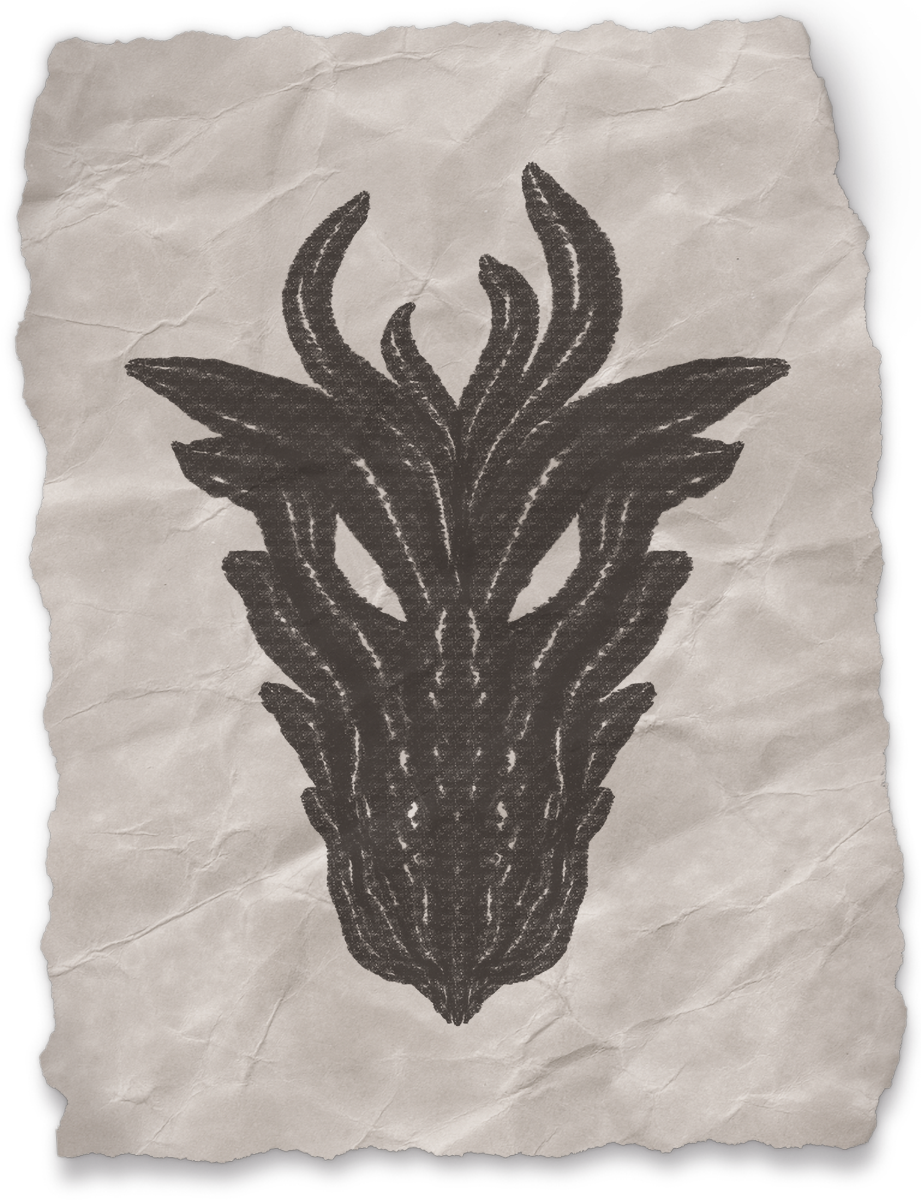 The Cults of the Dragon Below are as active in Droaam as they are in the Five Nations. The daelkyr destroyed the goblin empire long before humanity arrived, and their cults are as much of a threat to the people of Droaam as they are the Breland. The gnolls of the Znir Pact broke their ties to the fiendish overlords that created them, but there are others who are happy to seize the powers they abandoned.
The denizens of Droaam don’t have the same negative reaction to demons as many of the people of the east. The Shadow teaches that you may have to walk dark and dangerous paths to achieve your full potential, and many Cazhaak sages question the ‘arbitrary’ distinction between celestial and fiend. Because of this, there are many more warlocks than wizards in Droaam—though it’s worth noting that a warlock drawing power from an evil entity can use that power for noble purposes. However, such warlocks are often individuals walking their own unique paths.
The most significant and infamous cult in Droaam is that of the Horned King, a demon overlord of the first age who is imprisoned within the region. “The Horned King” is the most common translation of the Goblin term Vor’marhu, but some people translate it as “Horned Prince;” both titles refer to the overlord Tol Kharash. The Horned King has long been a patron of the minotaur clans of the eastern Barrens, and the warlord Rhesh Turakbar is a champion of this archfiend. This cult is well established in Droaam, and the minotaurs have followed this path for centuries. It’s widely known that the Horned King grants power to those who spill blood and sow terror in his name, and while many Droaamites don’t like Rhesh Turakbar, most don’t see his choice as any different than an eastern paladin who draws divine power from the Silver Flame; both have made a sacrifice that grants them power. The Znir Pact is a notable exception to this. They do understand the difference between a celestial and a fiend, and understand that this isn’t just a semantic point. Znir demon-hunters will help those threatened by fiends and even perform exorcisms. But as with all Znir, the hwyri are mercenaries who only act when their services are requested and paid for. It’s not the place of the Znir to prevent Turakbar and the minotaurs from making whatever pacts that they wish to; but the hwyri stand ready to bring down the corrupted warriors should the Daughters order it.
The Horned King is the common name of the overlord and the aspect worshiped by Rhesh Turakbar and his clan, the Blood Horns; they raid and pillage in his name. However, each of the major minotaur clans has their own unique interpretation of the Horned King. The Red Hooves are devoted to He Who Walks Behind, and prefer sly ambushes to the howling assaults of the Blood Horns. The Blade Breaker clan worships One Horn, who rewards displays of strength and courage. While the Blade Breakers are just as aggressive as the Blood Horns, they are less brutal; it’s just possible that while they think One Horn is an aspect of the Horned King, they are in truth drawing on a different power—perhaps, the essence of Dol Dorn.
If you wish to play a character tied to the Horned King or another overlord, the main question is whether you see your overlord as an ally dealing fairly with you—granting you power for spilling blood in their name—or if you have actually broken your ties with your cult and now use that power against them.
The daelkyr pose just as much a threat to the Daughters of Sora Kell and the denizens of Droaam as they do to the Five Nations. The one constant in the actions of the daelkyr is change—changing how people think, transforming them physically, tearing down whatever order exists. There are no known widespread cults of the Dragon Below on the frontier, and the Daughters of Sora Kell would likely destroy any they discovered. But the daelkyr certainly have influence within the region, and anywhere that they have power a cult can appear. The Still Lord, Orlassk, is said to have cursed the Stonelands around Cazhaak Draal and may have created the first gargoyles and medusas, though neither species serves him today. Some scholars believe that it was the influence of Avassh—the Twister of Roots—that forced the ancient nations to devastate the Barrens and create the regions known as dead lands. And it’s possible that Dyrrn the Corruptor’s masterstroke against the Empire of Dhakaan was launched within the Graywall Mountains. So there are no KNOWN cults on the frontier, but you never know what you will find in your adventures.
Many faiths rare to the Five Nations are all but unknown on the frontier. Most of the other faiths are tied to specific cultures that simply aren’t represented in the region. It’s always possible that you’ll discover an unexpected sect or shrine in your adventures—a remote farm maintained by a group of Kalashtar, an Aereni monastery supporting a deathless sage—but that would be a remarkable event. In general, following one of the other faiths is an opportunity for your character to stand out in the region. If you’re a Warden of the Wood, you’re not just a Warden, you’re the Warden; what drove you to cross the Byeshk Mountains? Are you hoping to start a new circle of Wardens in Droaam? Were you given a special quest by Oalian—perhaps a seed to plant in the Whitehorn Wood? Or are you just following your instincts and seeing where they lead you?
The Blood of Vol has no established shrines on the frontier, but there are rumors that there’s a community of Seekers in Graywall… though such Seekers are likely in Graywall because they’re war criminals or deserters, so if you’re a Seeker you’ll have to decide if you actually want to seek out your fellows. It’s also the case that most people on the frontier equate the Blood of Vol with Karrnath. Droaamites won’t care, and while they don’t have a strong tradition of necromancy, they revere the Shadow and the Keeper; they have no issues with the pursuit of “dark magic.” But Brelish veterans may have heard of the necromantic terror attacks Karrnath occasionally launched during the war, or the stories of skeletal legions, and hold that against you.
The Eldeen Druid Sects are rare in Droaam, as suggested above. The people of the frontier generally don’t know the difference between a Warden of the Wood or a Greensinger, and have no experience with Children of Winter. Shavalant was attacked by Ashbound during the Last War, and the people of that town are generally suspicious of all druids. The Gatekeepers, however, are a different story. The people of Breland know nothing about the Gatekeepers or their mission, but House Tharashk has considerable influence in Droaam, and there are at least some within the house who are sympathetic to the Gatekeepers and their mission. Likewise, there are certainly many places in Droaam that were touched by the daelkyr; there may well be daelkyr seals in the Graywall Mountains, or even below the Great Crag. If you are playing a Gatekeeper, work with your DM to decide if you have a specific mission—finding and reinforcing a seal, locating an elder Gatekeeper who’s gone missing, investigating reports of a daelkyr cult—or if you are following your own path. Not all denizens of Droaam will know who you are or what you represent, but some will and they may be sympathetic to your cause.
A final unusual faith unique to the region is the Maze of Faith, the priesthood of the Venomous Demesne. However, this religion is all but unknown beyond the Demesne and the tieflings have no interest in converting others to their faith. More information about this tradition can be found in chapter 1, but it’s possible to encounter a tiefling priest carrying their own personal god while wandering the frontier.